Municipal garbage collection curbside services in Columbus reject loose framing lumber, bundles of plaster, and structural debris generated during home renovations. A dedicated residential roll-off container collection…
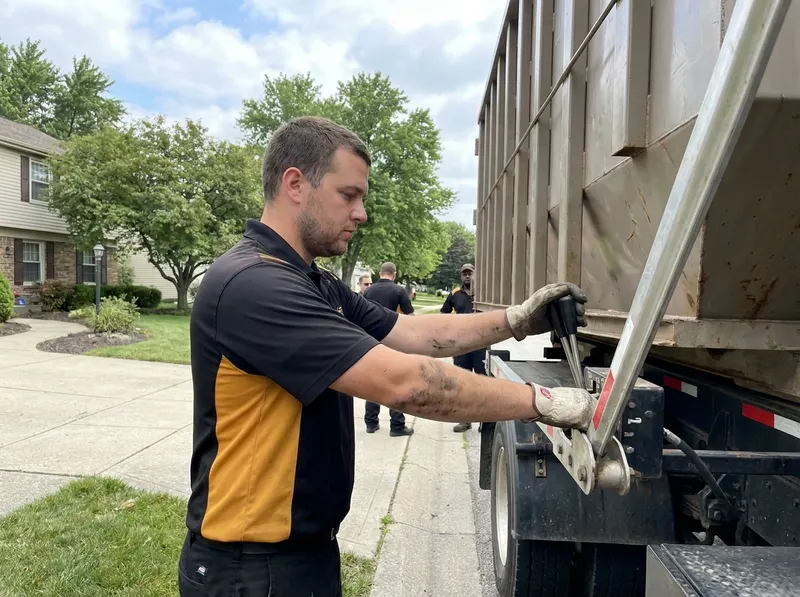
Municipal garbage collection curbside services in Columbus reject loose framing lumber, bundles of plaster, and structural debris generated during home renovations. A dedicated residential roll-off container collection service handles these heavy, mixed materials directly on site. Standard container sizes range from 10-yard bins (measuring 12 feet long, 8 feet wide, and 3.5 feet high, holding roughly 4 pickup truck beds of dense waste) up to 20-yard and 30-yard boxes for whole-home estate liquidations or multi-layer roof replacements. Every drop-off utilizes solid wood blocking under the steel roller wheels to prevent surface cracking, rutting, or asphalt indentations on private property.
Selecting container capacity requires balancing debris mass against physical footprint. If an estate executor is clearing household goods from a single-story brick home in Bexley or a split-level in Upper Arlington, a 15-yard box provides sufficient capacity without exceeding standard weight thresholds. Conversely, if a contractor is stripping 25 squares of architectural shingles in Clintonville or gutting lath-and-plaster walls in a German Village cottage, density escalates rapidly. Asphalt shingles weigh roughly 250 pounds per square per layer; overloading a smaller box past its included 2-ton rating results in municipal transfer station overage charges billed at $60 to $90 per excess ton.
Driveway clearances dictate collection viability across historic neighborhoods. Narrow alley access off High Street in the Short North Arts District, low telephone wires in Victorian Village, or restricted curb alignments in Olde Towne East require a flat 14-foot overhead clearance and 60 feet of straight approach for the roll-off hoist truck. When projects lack private driveway access in urban corridors like Franklinton or the University District, placing a roll-off container collection box in a designated public street space requires a right-of-way permit through the Columbus Department of Public Service. A private driveway drop-off requires zero municipal permits and keeps the bin stationed safely off traffic lanes.
Every job gets a firm, written price after a free on-site visit.
Tell us about your residential roll-off container collection job in Columbus and we'll send a clear, written quote, usually the same day.
 Direct Dumpster Rental